

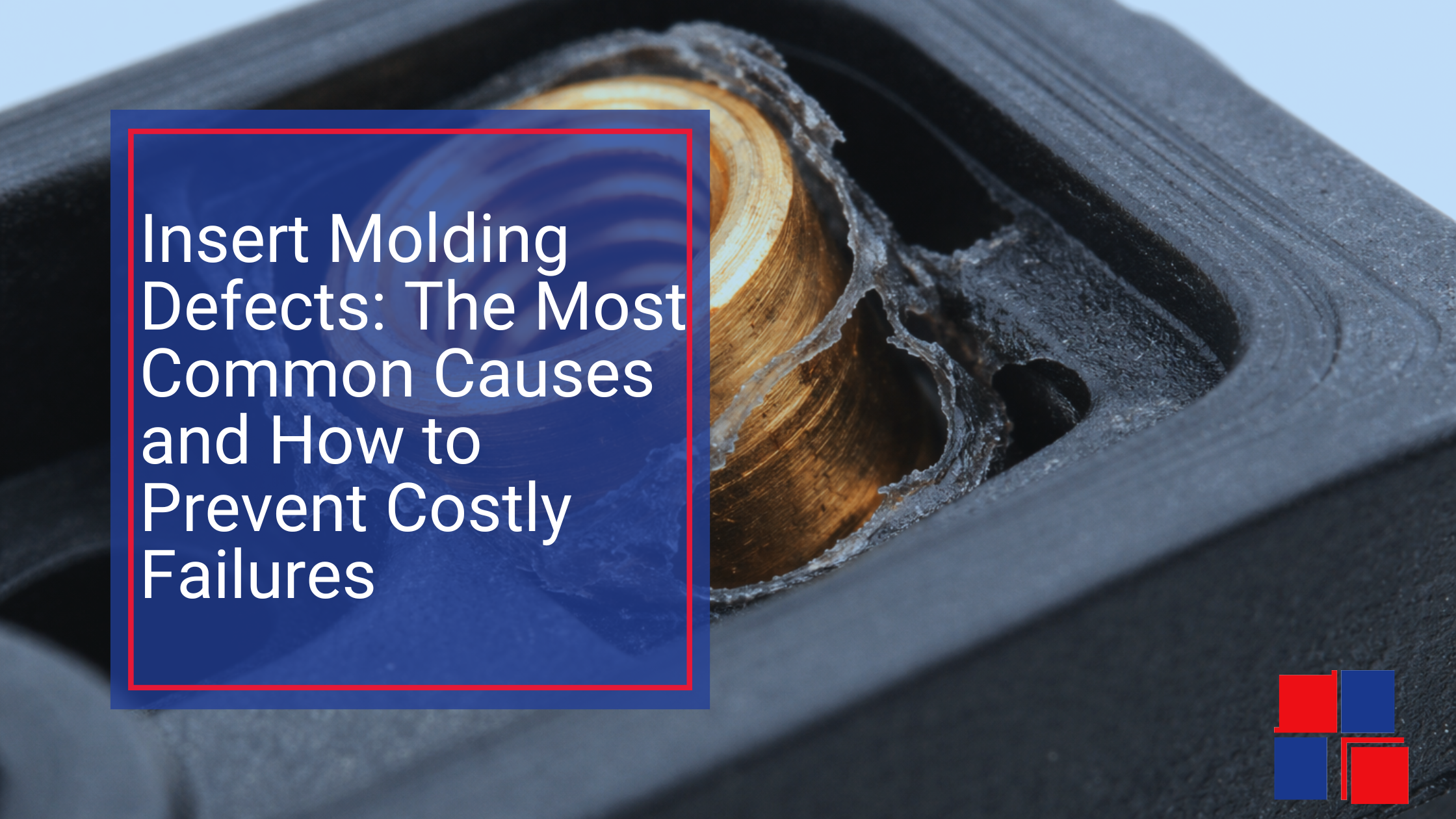
Insert molding is one of the best ways to combine plastic and metal into one robust part. It’s also one of the fastest ways to create scrap – or worse – tooling damage.
When an insert is missing, doubled, misaligned, or not fully seated, the next mold close can turn into a crash. This article covers the most common insert molding defects, what causes them, how to prevent them, and how vision verification can help you stop crunching molds before damage happens.
What is insert molding?
Insert molding is the process of placing an insert (metal, ceramic, magnet, threaded bushing, mesh, contact, etc.) into the mold and injecting plastic around it.
Insert molding problems are expensive because they can create:
- Hidden defects that show up later (assembly failures, weak bonds, leakage paths)
- High scrap when placement variation creeps in
- Catastrophic mold damage if a bad insert condition is missed before close
The most common insert molding defects
1) Insert misalignment (shift, tilt, rotation)
What it looks like: Insert is off-location, rotated, tilted, or not seated flush.
Why it matters: Can cause dimensional failures, exposed metal, weak bonding, or interference on close.
Common causes
- Insert not fully seated in the pocket
- Pocket contamination (plastic, debris, oil)
- Insert variation (burrs, bent tabs, inconsistent geometry)
- Worn nests or locating features
- Manual placement variability or EOAT drift
Prevention
- Add poka-yoke features (keyed geometry, lead-ins, chamfers)
- Build in relief for burrs and contamination
- Maintain nests/pockets and track wear limits
- Tighten insert supplier controls (burr, flatness, length)
- Add a verification step before mold close
2) Insert “float” during injection (moves under pressure)
What it looks like: Insert starts correct, then shifts as the cavity fills.
Why it matters: You can “pass” placement checks but still end up with bad position in the finished part.
Common causes
- Not enough retention (weak mechanical capture/magnets)
- Aggressive fill profile (speed/pressure)
- Flow forces pushing the insert (gate location, imbalance)
- Air trapped behind the insert (venting)
Prevention
- Improve retention: mechanical traps, stronger capture, spring features
- Tune fill/pack to reduce “push”
- Optimize gate location/flow direction
- Improve venting around the insert pocket
3) Poor adhesion / voids around the insert
What it looks like: Gaps, voids, delamination, cracking at the interface.
Why it matters: Weak parts, leaks, intermittent electrical contact, early field failures.
Common causes
- Insert contamination (oil, rust inhibitor, fingerprints)
- Resin moisture/drying issues
- Low melt temperature / short pack
- Poor venting and trapped gas
Prevention
- Define insert handling standards (gloves, storage, cleaning)
- Verify resin drying and moisture control
- Improve venting at the insert zone
- Validate pack/hold for a stable bond line
4) Flash around insert features
What it looks like: Thin excess plastic around shutoffs/insert boundary.
Why it matters: Secondary trimming, assembly interference, and often a clue your process/tool is drifting.
Common causes
- Insert not seated flush (creates a gap)
- Worn shutoffs near insert pocket
- Excessive injection/packing pressure
- Mold not fully closed due to debris or trapped part
Prevention
- Keep pockets clean and verify seating
- Maintain shutoffs; fix wear early
- Confirm clamp force and pressure profiles
- Use verification to prevent cycling on a bad condition
5) Short shot around/behind the insert
What it looks like: Incomplete fill where the insert blocks flow or creates a shadow zone.
Why it matters: Weak parts, dimensional failures, hidden functional defects.
Common causes
- Insert blocks flow path (design/gating)
- Low melt temperature / insufficient injection pressure
- Venting issues
- Viscosity shifts
Prevention
- Revisit gate and flow path strategy
- Tighten the process window (temp/speed/pack)
- Improve venting near the insert pocket
The expensive failure mode: closing the mold on a bad insert condition
Most insert molding teams can live through some scrap. What they can’t live through is the moment an insert is:
- missing
- doubled
- proud (not seated)
- rotated/wrong orientation
- wrong insert altogether
…and the mold closes anyway.
That’s where mold protection matters: stop the press before force is applied to the tool.
Stop crunching molds: why vision verification is a strong fit for insert molding
Insert molding needs more than “we think it’s in there.”
A robust vision check can verify:
- Insert presence (missing or double insert)
- Correct insert (wrong insert loaded)
- Orientation (rotation, flipped condition)
- Position (offset beyond tolerance)
- Seating / proud condition (when visually detectable)
Avalon’s MoldWatcher approach aligns to a simple goal:
- take a snapshot at the right time in the cycle
- confirm the mold is clear and inserts are correct
- stop the cycle if something is wrong
This is the “stop crunching molds” concept: use cameras + near-IR lighting to confirm parts/inserts and protect mold components before damage occurs.
Insert molding prevention checklist
Use this as a setup and troubleshooting checklist:
Insert
- Correct part number and orientation
- Controlled burr/flatness/length variation
- Clean handling and storage standards
Tooling
- Pocket clean, vented, and maintained
- Seating surface + relief for burrs/contamination
- Shutoffs inspected near insert zone
- Retention method validated (mechanical capture, magnet, etc.)
Process
- Fill/pack in a stable window
- Resin drying verified (where applicable)
- Drift monitored during startup and long runs
Verification
- Confirm insert condition before mold close
- Track alarms/stops so repeat causes get eliminated
Key takeaways for molding teams
- Insert defects often start as “small” placement variation, but can turn into scrap, assembly failures, or tool damage.
- The biggest risks are missing, doubled, proud, or wrong inserts.
- The best prevention combines poka-yoke tooling + controlled handling + a verification step.
Vision verification is especially valuable when orientation and seating matter—not just presence.
FAQ
What causes insert misalignment in insert molding?
Common causes include inconsistent placement, pocket debris, worn nests, insert burrs/bends, and weak poka-yoke features.
How do you prevent inserts from floating during injection?
Improve mechanical retention, reduce aggressive fill forces, optimize gate/flow direction, and improve venting around the insert pocket.
Can vision verify that an insert is seated correctly?
Vision reliably verifies presence, position, and orientation. Seating/flushness can often be detected when the insert/pocket design provides a visible cue (proud/tilted/debris), depending on the application.
What’s the most expensive insert molding failure?
A bad insert condition that goes undetected until the mold closes—leading to tooling damage and unplanned downtime.
If you’re running insert molding and want to reduce scrap and prevent tool damage, MoldWatcher can verify insert presence/orientation and help stop the press before a bad cycle turns into a crash. Contact Avalon for a budgetary quote.
References
- Plastics Engineering (SPE) — Flash in injection molding (causes & troubleshooting)
https://www.plasticsengineering.org/2024/09/intro-to-plastics-flash-in-injection-molding-006723/ - Protolabs — Solving gating problems in injection molding (gate/flow impacts)
https://www.protolabs.com/resources/design-tips/solving-gating-problems-in-injection-molding/ - RJG — Short shots: causes, prevention, troubleshooting
https://rjginc.com/short-shots-whats-the-deal/ - Fictiv — Injection molding short shot defects (common causes & mitigation)
https://www.fictiv.com/articles/injection-molding-short-shot-defects - PubMed Central (peer-reviewed) — Adhesion/bond strength in injection/overmolding interfaces
https://pmc.ncbi.nlm.nih.gov/articles/PMC7570169/