

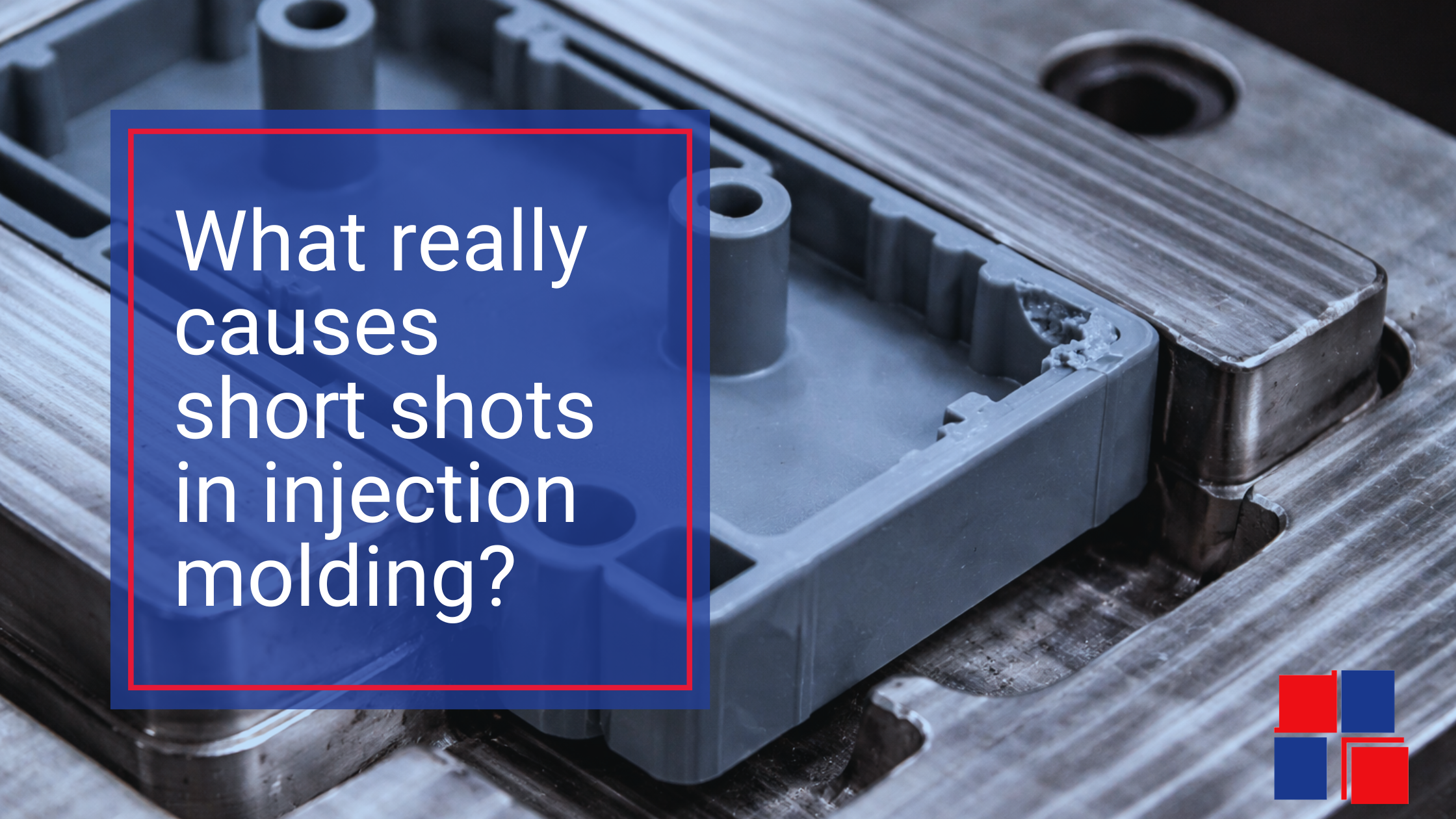
Understanding the root causes of short shots in injection molding and the warning signs behind them
Short shots in injection molding are one of the most common and frustrating defects.
They occur when the mold cavity is not completely filled, leaving portions of the molded part incomplete. The result can be unusable parts, increased scrap rates, and production delays.
For injection molding managers, the challenge is not just fixing short shots after they occur. The real goal is detecting them early and understanding what caused them so the process can be corrected before production losses escalate.
What causes short shots in injection molding?
Short shots occur when molten plastic fails to completely fill the mold cavity during injection.
This typically happens when the polymer flow stops before reaching all areas of the mold.
Common causes include:
- insufficient injection pressure
- low melt temperature
- poor mold venting
- restricted gate or runner design
- material viscosity issues
- flow path imbalance
- trapped air in the mold cavity
Because injection molding involves tightly controlled process variables, small changes in temperature, pressure, or flow can disrupt the filling process and lead to incomplete parts [1].
What is a short shot in injection molding?
A short shot is an injection molding defect in which molten plastic does not fully fill the mold cavity before solidifying.
Short shots can appear as:
- missing part sections
- incomplete edges or ribs
- partially formed features
- voids where plastic did not reach
These defects typically occur during the filling stage of the injection molding cycle.
If the material flow stops prematurely, the cavity will not completely fill and the molded part will be incomplete [2].
Why short shots matter in production
Short shots are not just cosmetic defects. They often signal underlying process instability.
Potential impacts include:
- increased scrap rates
- interrupted production runs
- troubleshooting downtime
- inconsistent part quality
- potential tooling or process issues
In medical or high-precision molding environments, incomplete parts can also trigger quality investigations or process reviews.
Because injection molding relies on stable process conditions, detecting abnormalities early helps prevent larger production disruptions [1].
Common causes of short shots in injection molding
Short shots can originate from several different areas of the molding process.
Insufficient injection pressure
If injection pressure is too low, molten plastic may not have enough force to travel through the entire mold cavity.
This is one of the most common causes of short shots.
Low melt temperature
When melt temperature is too low, material viscosity increases. Higher viscosity reduces flow and can prevent the material from filling thin sections or complex geometries.
Inadequate mold venting
Air trapped in the mold cavity can block the flow of molten plastic. Proper venting allows trapped gases to escape and ensures complete cavity filling.
Flow path imbalance
Multi-cavity molds can experience uneven filling if runners or gates are not balanced. Some cavities may fill completely while others experience short shots.
Restricted gates or runners
If the runner system or gate size restricts flow, the molten material may solidify before reaching the end of the cavity.
Material issues
Changes in resin properties, moisture content, or material temperature can also influence flow characteristics.
Industry guidance frequently emphasizes that injection molding defects often arise from the interaction of multiple process variables rather than a single root cause [2].
Where short shots occur in the molding cycle
Short shots occur during the filling phase of the injection molding process.
During this phase:
- Molten polymer is injected into the mold cavity.
- The material flows through runners and gates.
- The cavity fills until pack and hold pressure begins.
If the polymer loses flow before the cavity fills, the result is a short shot.
Early indicators of short shots
Short shots often present early warning signs before they become frequent production issues.
These indicators may include:
- partially formed parts appearing intermittently
- incomplete ribs or thin features
- variation in part weight
- inconsistent cavity fill in multi-cavity molds
- sudden increases in scrap rates
Detecting these conditions early helps teams identify process changes before they affect large production runs.
Table: Common short shot causes and detection clues
| Cause | Process Indicator | Detection Clue |
| Low injection pressure | Reduced cavity fill | Incomplete part sections |
| Low melt temperature | Increased material viscosity | Thin areas not filling |
| Poor mold venting | Trapped air in cavity | Burn marks or incomplete fills |
| Flow imbalance | Uneven cavity filling | Some cavities produce short shots |
| Restricted gates | Limited material flow | Small features missing |
| Material variation | Inconsistent viscosity | Intermittent short shots |
Why early detection matters
Short shots are often discovered after parts leave the mold, which means production time and material have already been lost.
Early detection allows molding teams to:
- identify process instability faster
- adjust process parameters sooner
- reduce scrap and downtime
- maintain consistent production conditions
For many molding operations, the biggest cost of short shots is not the individual defective part – it is the time spent diagnosing the root cause.
How automated inspection can help detect short shots
Many molding facilities rely on automated inspection or monitoring systems to detect part anomalies as they occur.
Inspection systems can help identify:
- incomplete fills
- missing features
- inconsistent part geometry
- abnormal process conditions
By capturing inspection images, alarms, and event records tied to the molding cycle, these systems help create a clearer picture of what occurred during production.
Technologies such as MoldWatcher and ThermalWatch help improve press-side visibility by identifying abnormal conditions during molding cycles and documenting inspection events.
This type of process visibility can make troubleshooting faster and more efficient for molding teams.
Key takeaways for injection molding managers
- Short shots occur when molten plastic fails to completely fill the mold cavity.
- Common causes include low injection pressure, low melt temperature, poor venting, and flow imbalance.
- Early indicators include incomplete features, inconsistent cavity fills, and sudden scrap increases.
- Detecting short shots early helps reduce production losses and troubleshooting time.
- Press-side monitoring and inspection systems can help document part anomalies and process events.
FAQ
What is a short shot in injection molding?
A short shot is a molding defect where molten plastic does not completely fill the mold cavity before solidifying, resulting in incomplete parts.
What causes short shots in injection molding?
Common causes include low injection pressure, insufficient melt temperature, restricted runners or gates, poor mold venting, and flow imbalance in multi-cavity molds.
How can molders detect short shots early?
Short shots can be detected through part inspection, monitoring changes in part weight or geometry, observing inconsistent cavity fills, or using automated inspection systems that detect incomplete parts.
Are short shots caused by tooling or process issues?
Short shots can be caused by either tooling design issues or process parameter changes. In many cases, the root cause involves a combination of factors affecting material flow during the filling stage.
References
- Rosato, D., Rosato, M. Injection Molding Handbook. Springer Publishing.
- Beaumont, J. Runner and Gating Design Handbook for Injection Molding. Hanser Publications.